
Skinny Fat Workout: A beginner skinny fat workout plan with real sets, reps, and nutrition guidance to build muscle and lose fat at the same time.
Skinny Fat Workout
Table of Contents
A Beginner’s Guide to Building Muscle and Losing Fat at the Same Time
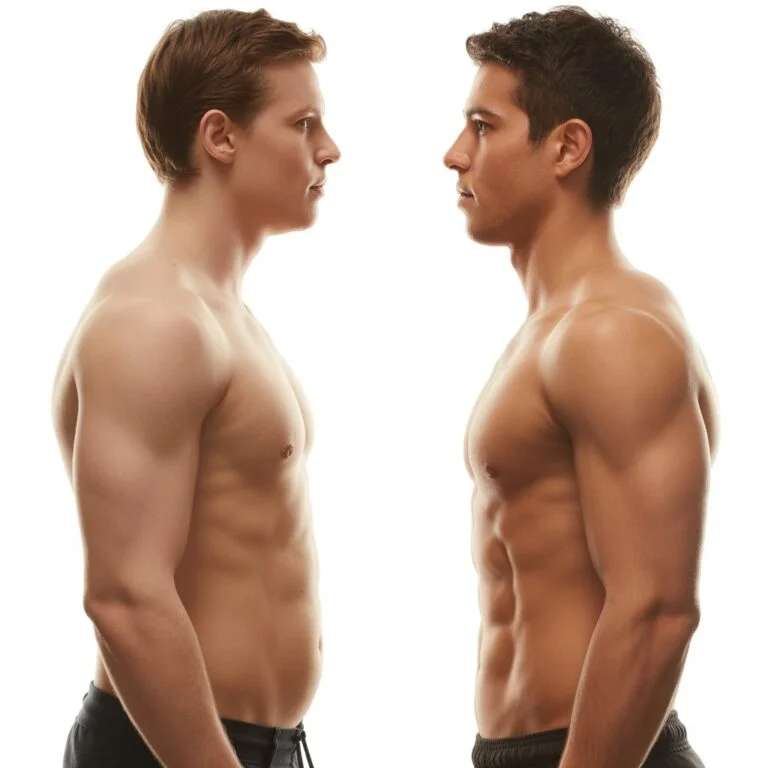
This skinny fat workout plan is built for one specific person: someone who looks thin in a t-shirt but carries visible softness around the stomach, chest, or hips, with little muscle definition anywhere. The realistic timeframe to see real change is 12 to 16 weeks of consistent training, not four. Give it less time than that and you’ll likely quit right before the composition of your body actually starts shifting.
What “Skinny Fat” Actually Means for Your Training
The medical term for this is closer to normal-weight obesity — a body that lands in a healthy range on a scale but carries a higher percentage of body fat relative to muscle than that scale number suggests. Harvard T.H. Chan School of Public Health has written about this exact mismatch between body weight and body composition, and it’s a big part of why two people at the same weight can look completely different. You’re not “fat” and you’re not just “skinny.” You’re under-muscled, and that’s a training problem before it’s a diet problem.
This matters because the instinct for a lot of people in this position is to just cut calories harder. That backfires. Losing weight without building muscle at the same time often makes you look softer, not more defined — smaller, but still shapeless. The actual fix is body recomposition: building muscle and losing fat in the same window of time, which is slower than either goal alone but is the only approach that changes how you actually look.
What You’ll Need Before You Start
A basic gym membership covers this program completely — barbell, dumbbells, a bench, and a cable station or resistance bands if the gym has them. No gym access? A pair of adjustable dumbbells and a pull-up bar will get you through every session with minor exercise swaps. Comfortable shoes and 45 to 60 minutes, four days a week. That’s the entire equipment list.
The 12-Week Skinny Fat Workout Program
This is a four-day upper/lower split, chosen because it hits every muscle group twice a week — the frequency research consistently favors for beginners building muscle. Rest 90 seconds between sets on compound lifts, 60 seconds on isolation work.
| Day | Focus | Exercise | Sets x Reps |
|---|---|---|---|
| 1 | Upper (Push-Pull) | Barbell Bench Press | 3 x 8 |
| Bent-Over Row | 3 x 8 | ||
| Overhead Press | 3 x 10 | ||
| Lat Pulldown | 3 x 10 | ||
| Tricep Pushdown | 2 x 12 | ||
| 2 | Lower Body | Barbell Squat | 3 x 8 |
| Romanian Deadlift | 3 x 8 | ||
| Walking Lunges | 3 x 10 per leg | ||
| Standing Calf Raise | 3 x 15 | ||
| 3 | Rest or Light Cardio | 20–30 min brisk walk or cycling | — |
| 4 | Upper (Pull-Push) | Pull-Ups or Assisted Pull-Ups | 3 x 6–8 |
| Incline Dumbbell Press | 3 x 10 | ||
| Seated Cable Row | 3 x 10 | ||
| Lateral Raise | 3 x 12 | ||
| Bicep Curl | 2 x 12 | ||
| 5 | Lower Body + Core | Deadlift | 3 x 6 |
| Leg Press | 3 x 10 | ||
| Hip Thrust | 3 x 10 | ||
| Hanging Leg Raise | 3 x 12 | ||
| 6–7 | Rest | Full recovery, light movement optional | — |
Twenty minutes of steady-state cardio on two of the rest days keeps the fat-loss side of recomposition moving without eating into the recovery your muscles need from lifting. Nothing more aggressive than that in week one. The instinct to add extra cardio sessions on top of a new lifting program is exactly how people end up sore, under-slept, and quitting by week three.
How to Progress Without Guessing
Add 2.5 to 5 pounds to a lift once you hit the top of the rep range for all three sets with clean form — that’s the entire progression system, and it works because it forces gradual overload instead of guesswork. ACSM’s position on progressive overload is blunt about this: without a steady increase in demand on the muscle, size and strength gains stall within a few weeks regardless of how hard each session feels. Track every session in a notes app. If a lift stalls for two straight weeks, drop the weight 10% and rebuild from there rather than pushing through with worse form.
Nutrition: The Other Half of Fixing Skinny Fat
Training builds the muscle. Food determines whether you actually see it. A slight caloric surplus of 200 to 300 calories above maintenance, paired with 0.7 to 1 gram of protein per pound of bodyweight, gives you enough raw material to build muscle without adding significant fat — this range lines up with what the International Society of Sports Nutrition has published on protein needs for people strength training regularly. Split that protein across four meals rather than cramming it into one, since the body uses it more efficiently that way.
Carbs and fats fill the rest of your calories based on preference — there’s no magic ratio here, whatever’s sustainable for you day to day is the right one. A sample day might look like eggs and oats for breakfast, chicken and rice for lunch, a protein shake around your workout, and fish or lean beef with vegetables at dinner. The research on optimal meal timing specifically is still a little split, so don’t stress the clock as much as the daily total.
Recovery and Why Overtraining Backfires Here
Seven to nine hours of sleep is doing more for your results than any supplement on a shelf, and skipping it is the single most common way skinny fat beginners sabotage an otherwise solid program. Muscle isn’t built in the gym — it’s built during the 48 hours after, when the tissue repairs and grows past its previous size. Push through soreness on back-to-back training days and you’re interrupting that exact process. One full rest day between upper and lower sessions is non-negotiable in the first eight weeks, even if you feel fine.
Mistakes That Keep People Skinny Fat for Years
Chronic cardio without any resistance training is the most common one — it burns calories but does nothing to build the muscle that actually changes your shape. Extreme caloric deficits are a close second: they strip fat and muscle together, which is how someone ends up smaller and still soft. Skipping protein at breakfast, chasing a different workout program every two weeks before any one of them has time to work, and measuring progress only by the scale instead of a mirror and a tape measure round out the list. None of these are complicated fixes. Most of them just take patience most beginners don’t expect to need.
If you’re new to structured exercise, have a heart condition, or are managing any existing injury, get cleared by a doctor before starting a program this frequent — NASM’s guidance on new exercisers is consistent on that point regardless of how straightforward a plan looks on paper.
FAQs
How long does it take to fix a skinny fat body type?
Visible change in muscle definition usually starts around week 6 to 8, with a clearly different look by week 16, assuming consistent training and eating.
Can you build muscle and lose fat at the same time as a beginner?
Yes — this is one of the few windows in a training career where body recomposition works reliably, mainly because beginners respond faster to new resistance training stimulus.
Do I need a caloric deficit for a skinny fat workout to work?
Not necessarily. A small surplus with adequate protein often works better here than a deficit, since it supports the muscle growth that actually changes your shape.
Is cardio bad for skinny fat body types?
No, but cardio alone won’t fix it. Two light sessions a week alongside resistance training supports fat loss without cutting into recovery.
How many days a week should a beginner train for this?
Four lifting days with one to two rest or light-cardio days works well without overwhelming someone new to structured training.
Can women follow this same skinny fat workout plan?
Yes — the program and the underlying recomposition principles apply the same way regardless of gender; only individual calorie and protein targets shift based on bodyweight.
What’s the biggest mistake beginners make with this body type?
Cutting calories aggressively instead of training with enough intensity and eating enough protein to actually build muscle.
Sources Used
For Skinny Fat Workout
- Harvard T.H. Chan School of Public Health — body composition and normal-weight obesity research
- American College of Sports Medicine (ACSM) — progressive overload and resistance training guidelines
- International Society of Sports Nutrition (ISSN) — protein intake position stand
- National Academy of Sports Medicine (NASM) — exercise readiness guidance for new trainees
Disclaimer: This article is educational and isn’t a substitute for personalized medical advice — anyone new to exercise or managing an existing health condition should check with a doctor before starting this program.
| For More Updates Like That; Visit Alice Fitness